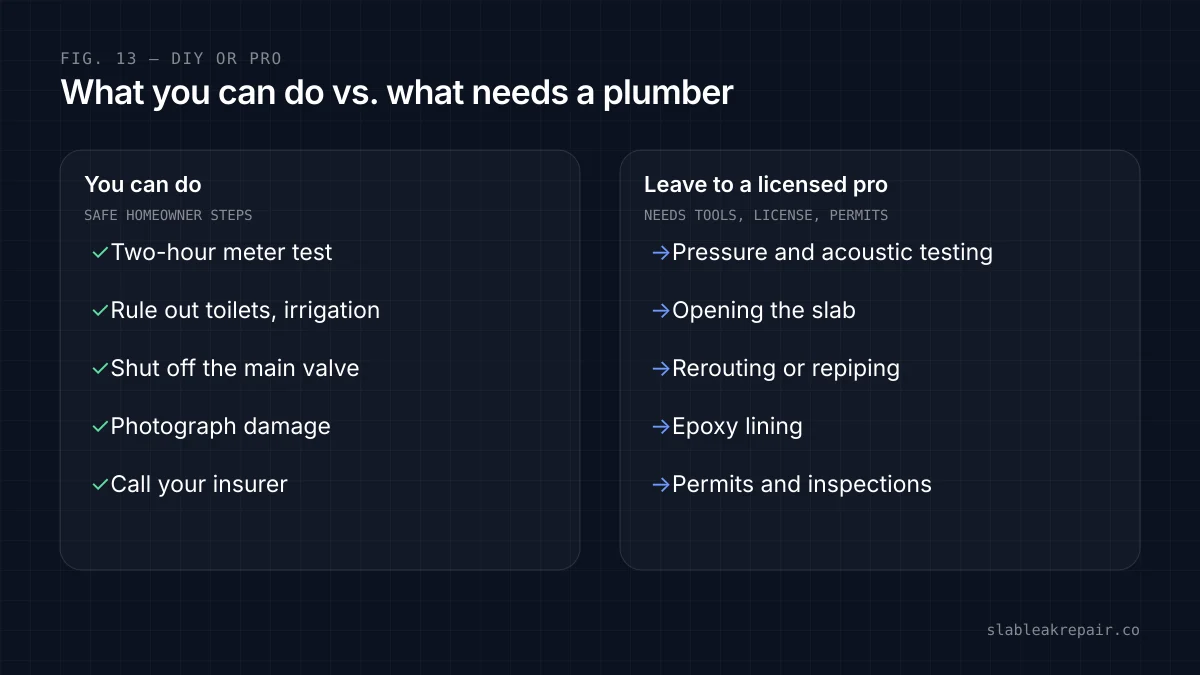
What can I safely do myself?
- Run the EPA’s two-hour water meter test: read the meter, use no water for two hours, and read it again. A change suggests a leak.[1]
- Rule out toilets, faucets and irrigation, which can move the meter too.
- Find your main water shutoff and close it if water is surfacing.
- Photograph any damage and notify your insurer.
Why does the repair need a licensed plumber?
Pinpointing a leak under concrete takes pressure-testing gear, acoustic equipment or thermal imaging. The repair means breaking and patching concrete, rerouting pipe through walls, or lining pipe, and many cities require a permit. Mistakes can mean opening the wrong section of floor or damaging other buried lines.
If any digging happens outside, every state requires calling 811 48 to 72 hours beforehand so underground utilities are marked, and the service is free.[2]
Do leak sealant products work on slab leaks?
Products sold to seal leaks from inside the plumbing aren’t a substitute for locating and repairing the leak. Professional epoxy lining is a different process: the pipe is drained, cleaned and coated by a specialist. See our epoxy pipe lining guide.
Frequently asked questions
How much can I save doing it myself?
Very little, and the risk is high. The expensive parts of a slab leak job are locating the leak precisely and the concrete or rerouting work, which need equipment and licensed labor. Use our cost guide to see typical prices.
Sources
- [1]U.S. Environmental Protection Agency, WaterSense, “Fix a Leak Week.” www.epa.gov/watersense/fix-leak-week (accessed )
- [2]U.S. DOT Pipeline and Hazardous Materials Safety Administration, “Call Before You Dig!.” primis.phmsa.dot.gov/stakeholder-comms/cbyd (accessed )