Guides
Slab leak guides
Plain-language answers to the questions homeowners ask most, from the first warning sign to the final invoice.
Understand the problem

Repair methods
Slab leak repair methods compared
Spot repair, pipe reroute, epoxy lining or whole-home repipe: how each slab leak repair works, side by side, and the trade-offs to weigh before you choose.
Read
Signs and symptoms
Signs of a slab leak, and what else they could mean
Warm floors, a moving water meter, a rising bill and five more signs of a slab leak, with the other common causes to rule out before you call a plumber.
Read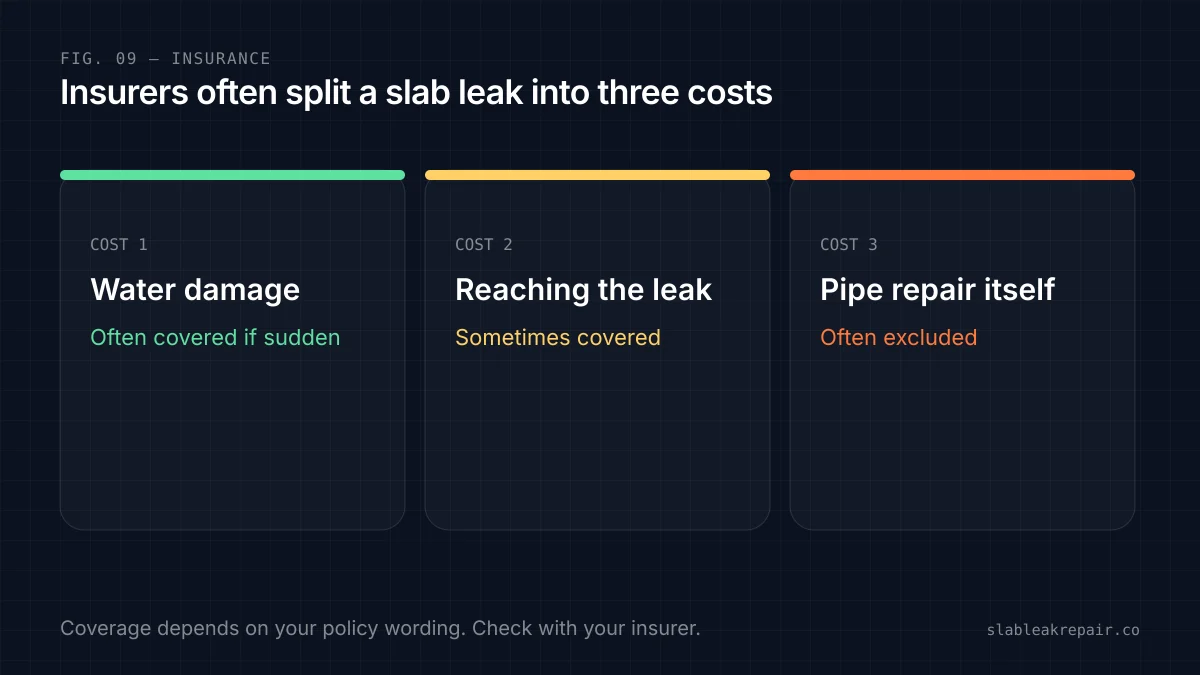
Insurance
Does homeowners insurance cover slab leaks?
What homeowners policies commonly cover and exclude for slab leaks, the questions to ask your insurer, and the steps that protect your claim from day one.
Read
Causes
What causes slab leaks? Six common causes explained
Corrosion, abrasion, soil movement, installation flaws, water chemistry and high pressure: how each causes slab leaks, who is at risk, and how to prevent them.
Read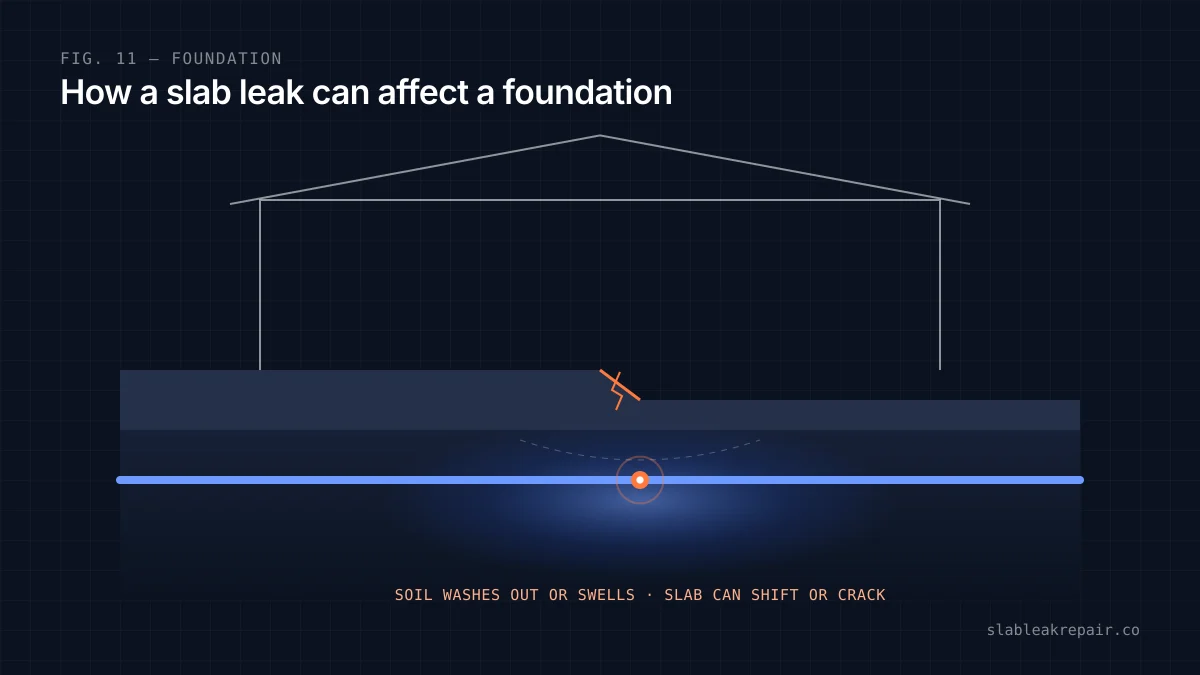
Foundation damage
Can a slab leak damage your foundation?
How water from a slab leak can wash out or swell the soil under a foundation, the signs your foundation is affected, and whether to fix the leak or slab first.
Read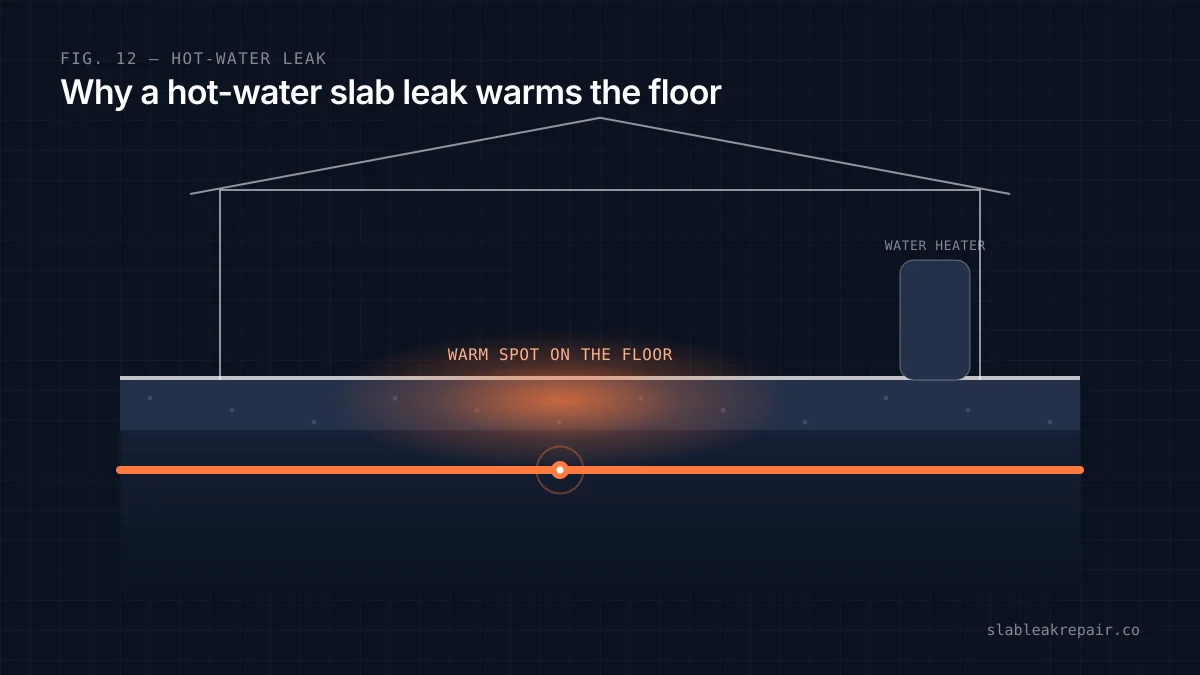
Hot-water slab leak
Hot water slab leak: signs, tests and what to do
Warm spots on the floor, a water heater that never stops, higher energy bills: the signs of a hot water slab leak, how plumbers confirm it, and what to do now.
Read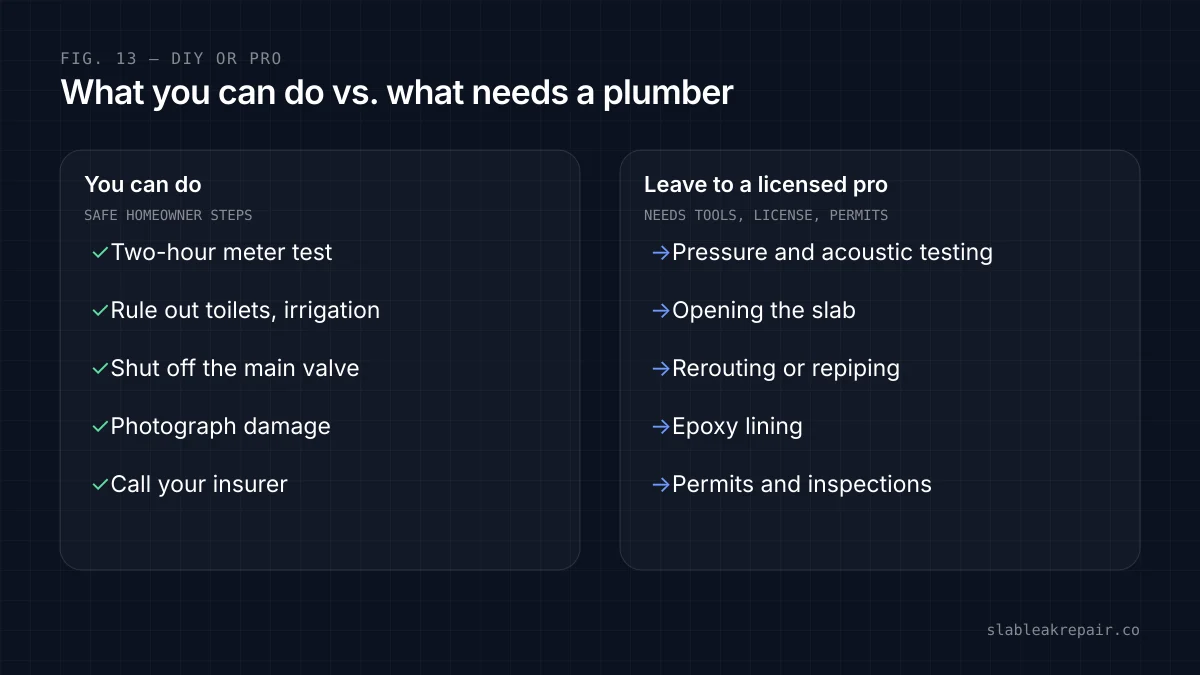
DIY or pro?
Can you fix a slab leak yourself?
What homeowners can safely do about a slab leak (meter test, shutoff, photos) and why locating and repairing the leak is a job for a licensed plumber.
Read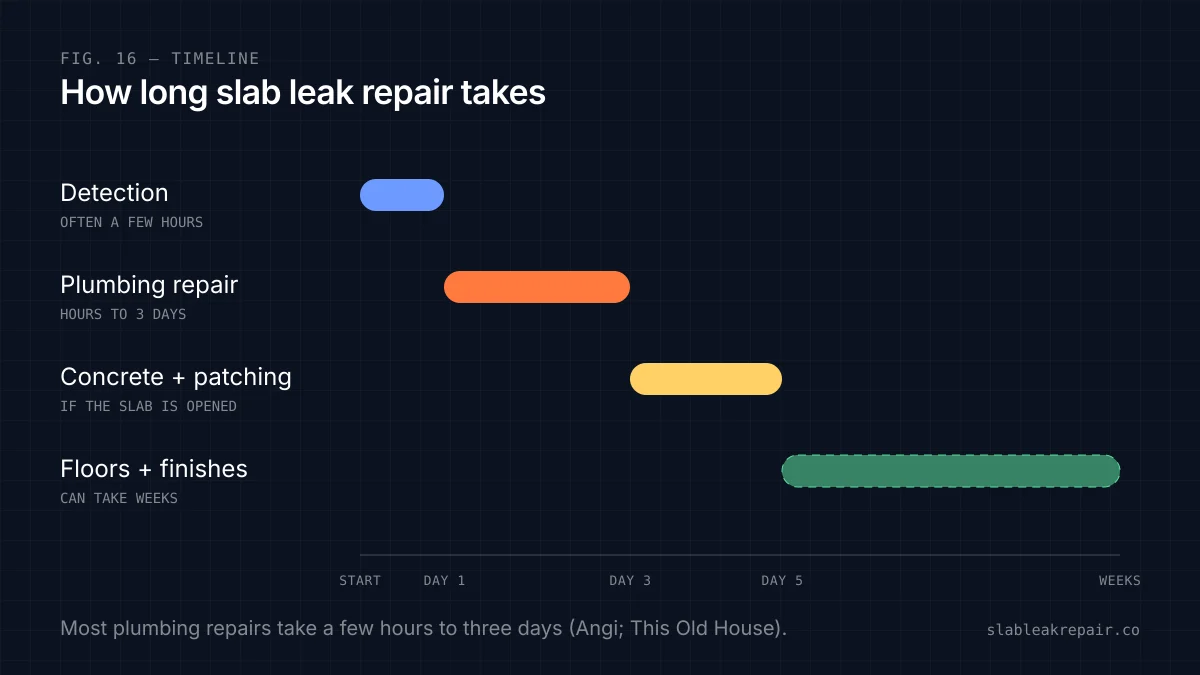
Timeline
How long does slab leak repair take?
Most slab leak repairs take a few hours to three days. See the timeline for detection, the plumbing fix, concrete patching and floor restoration.
Read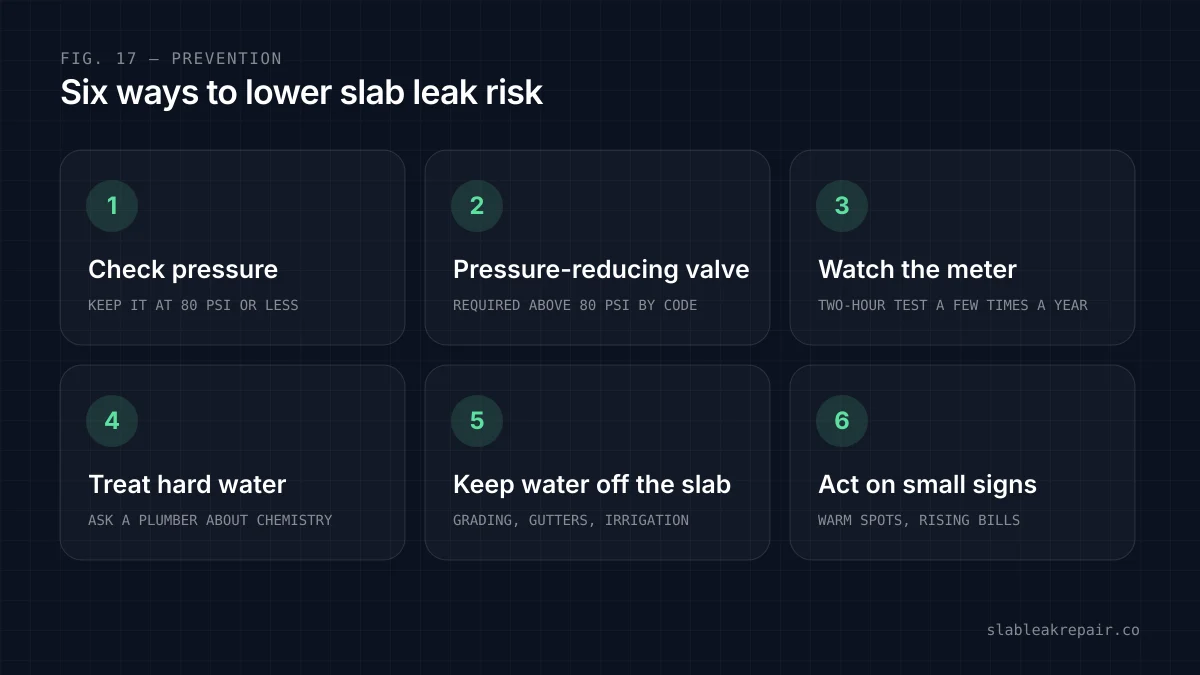
Prevention
How to prevent slab leaks: six practical steps
No slab is leak-proof, but you can lower the risk. Check water pressure, keep it at 80 psi or less, watch your meter and act on early signs.
Read
Hiring
How to choose a slab leak repair company
What to check before you hire a slab leak plumber: license, insurance, precise leak location, an itemized quote, permits, warranty and insurance help.
Read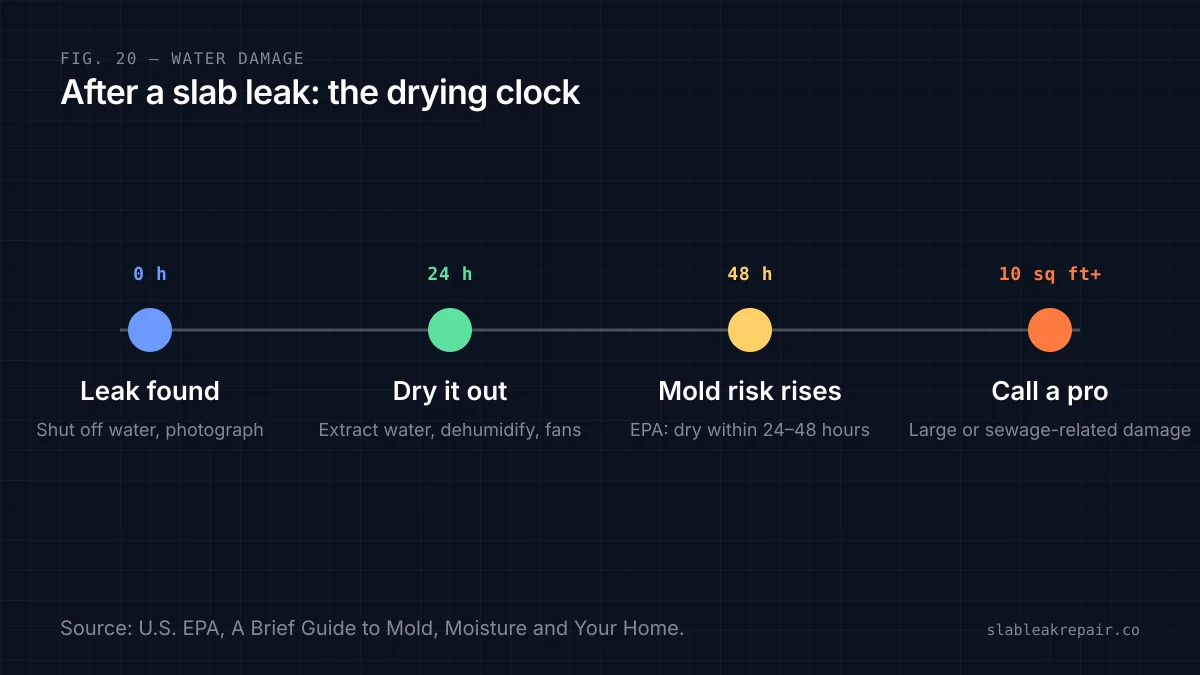
Water damage
Slab leak water damage: drying out and preventing mold
What to do about water damage after a slab leak: stop the water, dry everything within 24–48 hours as the EPA advises, and when to call a pro for mold.
Read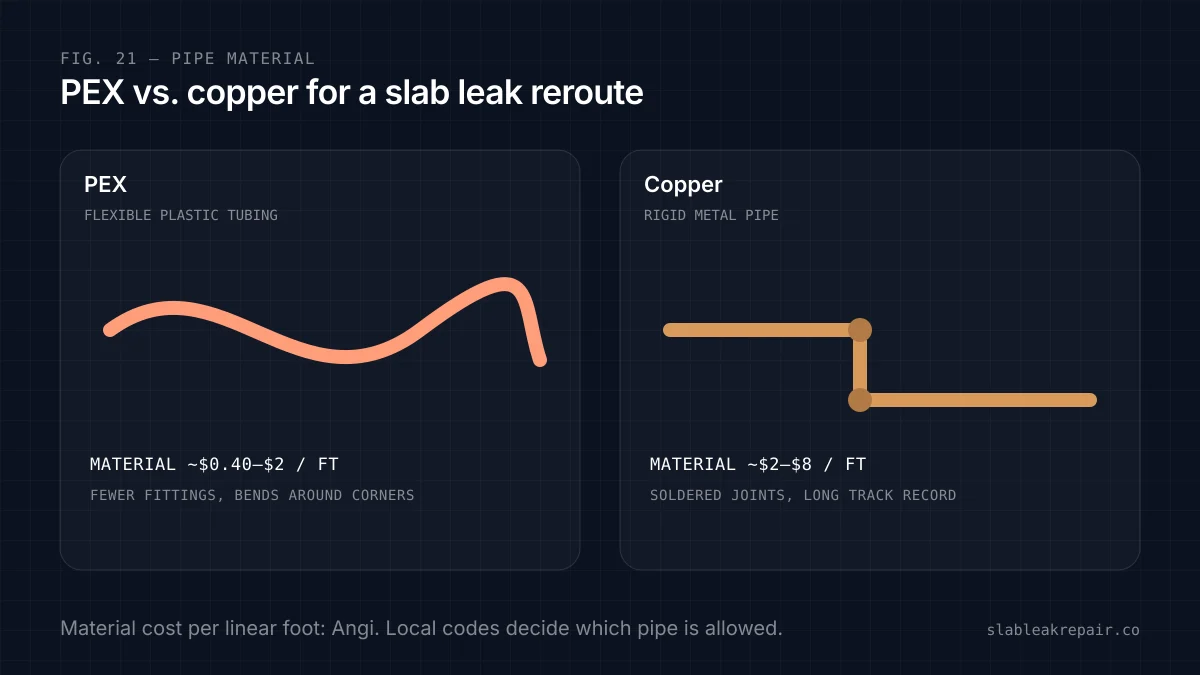
Pipe material
PEX vs. copper for a slab leak reroute or repipe
Choosing pipe for a slab leak reroute or repipe: PEX vs. copper on material cost per foot, installation, durability and what your local code allows.
Read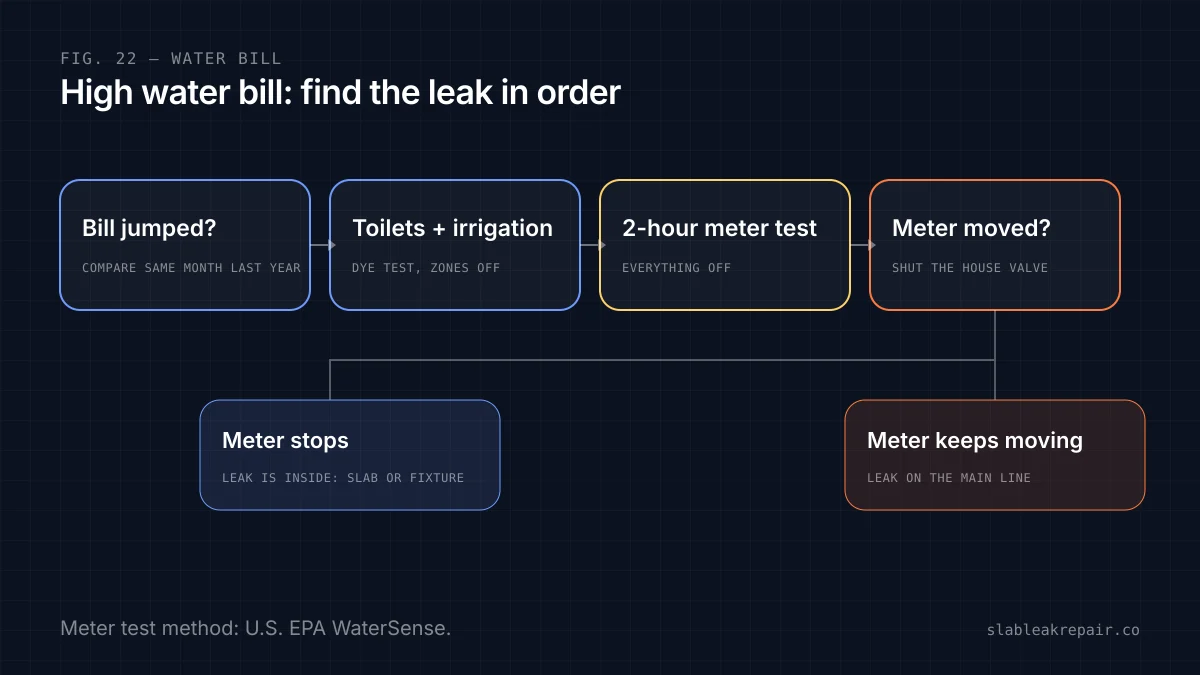
Water bill
High water bill? How to tell if it’s a slab leak
A sudden jump in your water bill can mean a hidden leak. Rule out toilets and irrigation, run the meter test, and see when a slab leak is the likely cause.
Read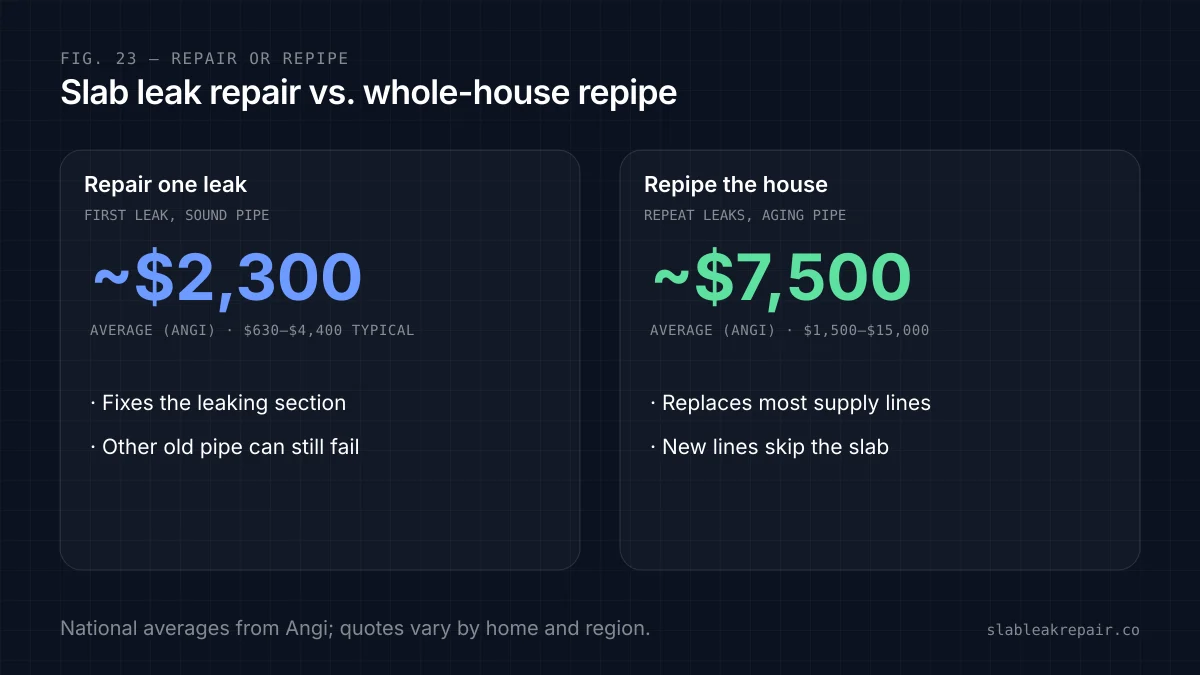
Repair vs. repipe
Slab leak repair vs. repipe: which makes sense?
A slab leak repair averages about $2,300 while a whole-house repipe averages $7,500 (Angi). When fixing one leak is enough, and when repiping costs less.
Read
Water bills
How to request a water bill leak adjustment after a slab leak
How to ask your water utility for a leak credit after a slab leak: deadlines, the documents to keep, what credits usually cover, and a sample request.
Read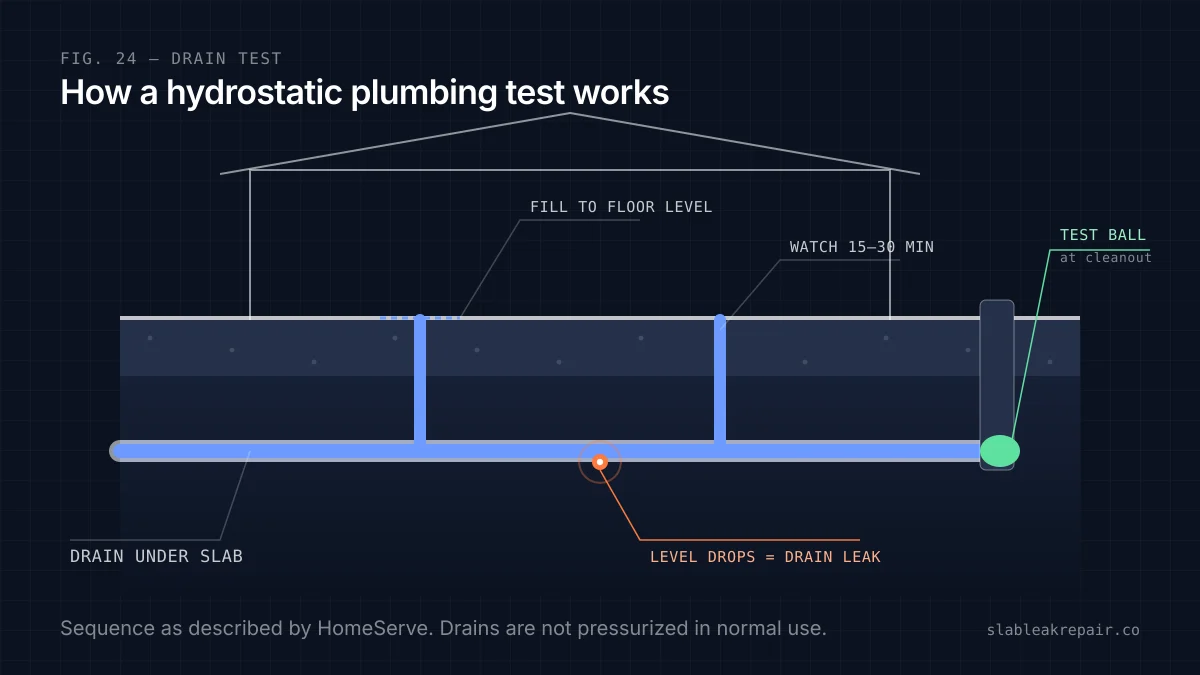
Drain testing
Hydrostatic plumbing test: how it checks the drains under your slab
What a hydrostatic plumbing test is, how a plumber runs it on the drains under a slab, what it costs, when it is worth doing and the limits of the result.
Read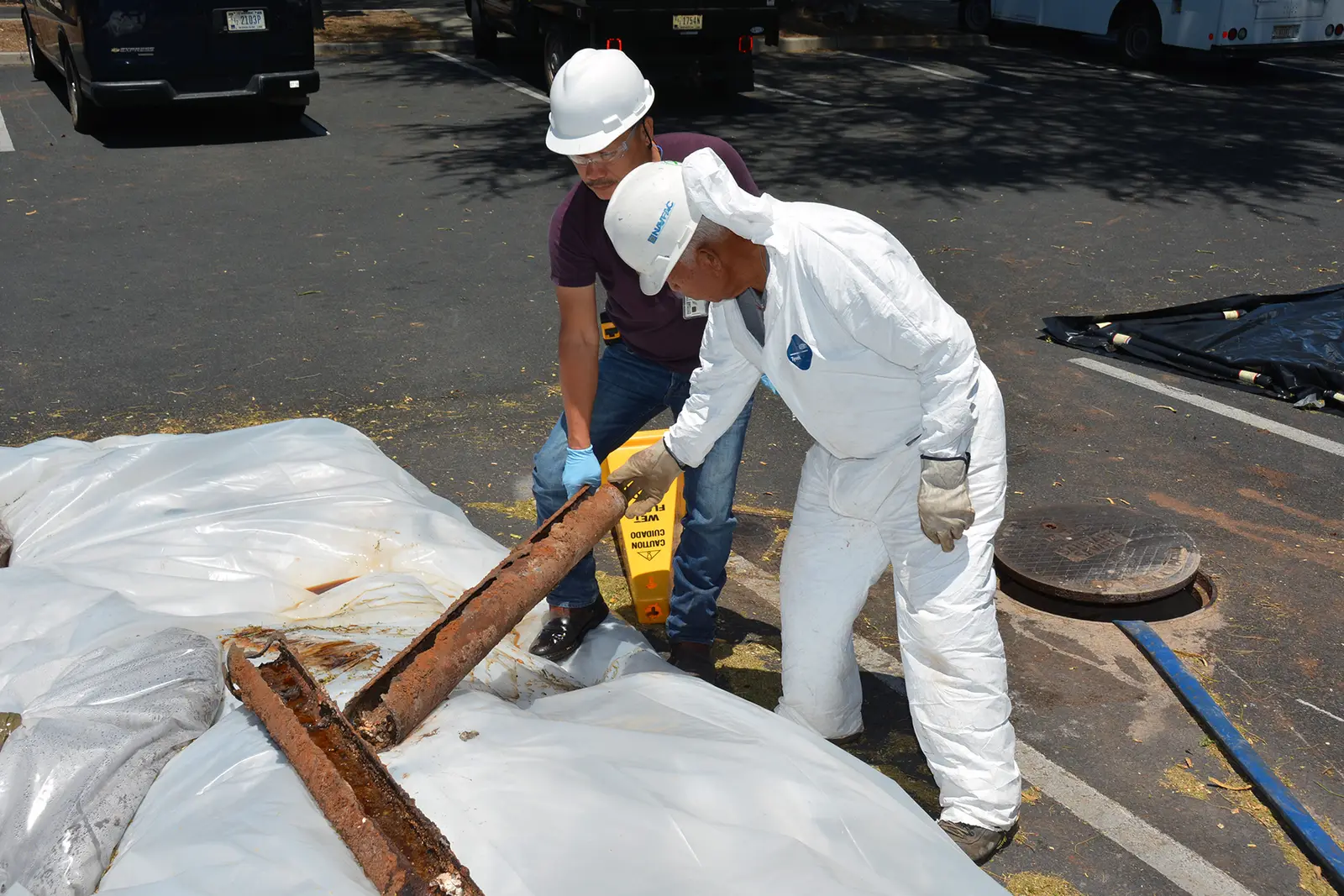
Drain lines
Cast iron drain pipe under a slab: failure signs, tests and repair choices
How cast iron drains under a concrete slab fail, how to confirm the damage with a camera and a drain test, and how lining, rerouting and replacement compare.
Read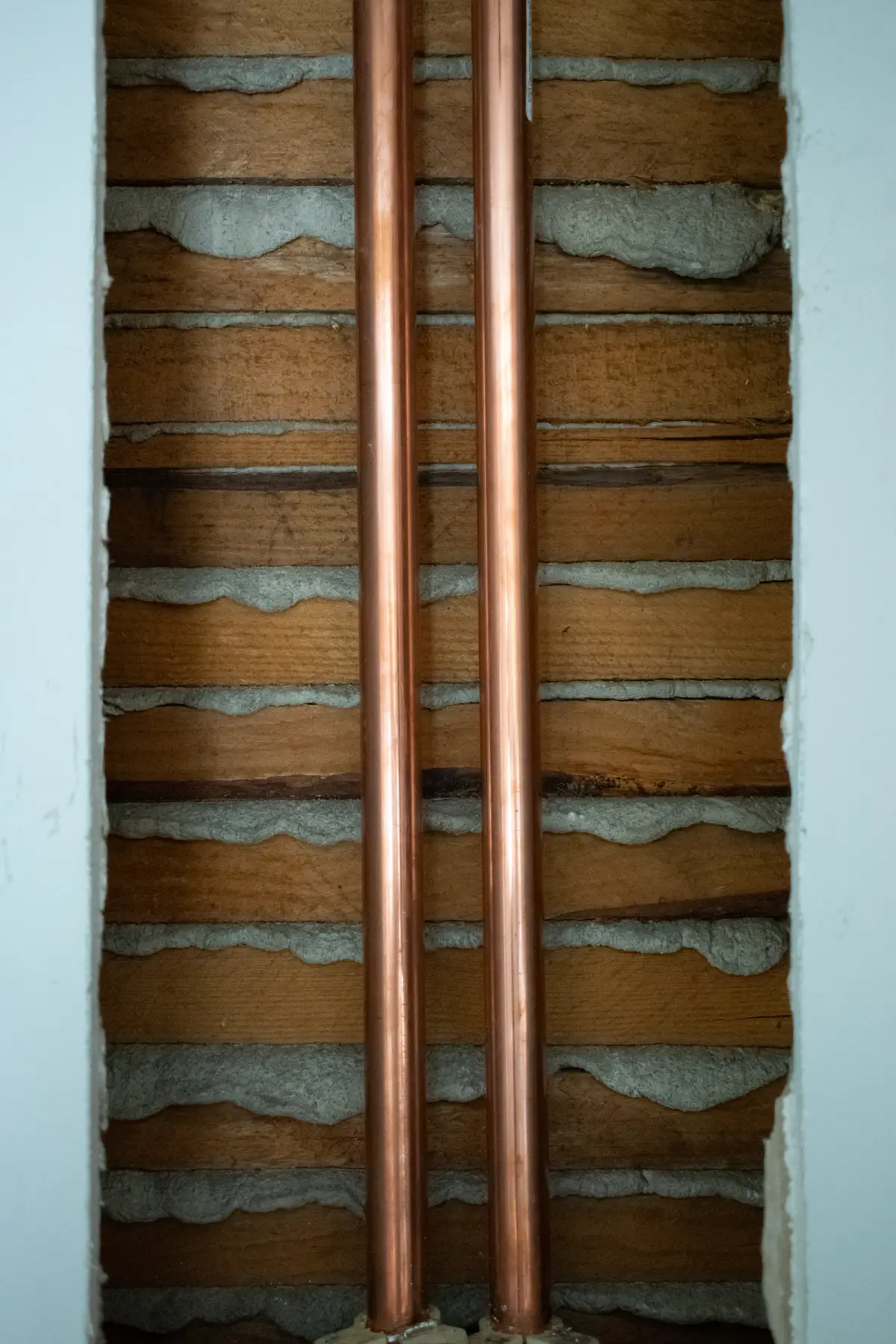
Pipe materials
Pinhole leaks in copper pipes: causes, signs and repair options
Why copper water pipes develop pinhole leaks, the signs to watch for, when one repair is enough, and when repeat pinholes point to a repipe or a reroute.
Read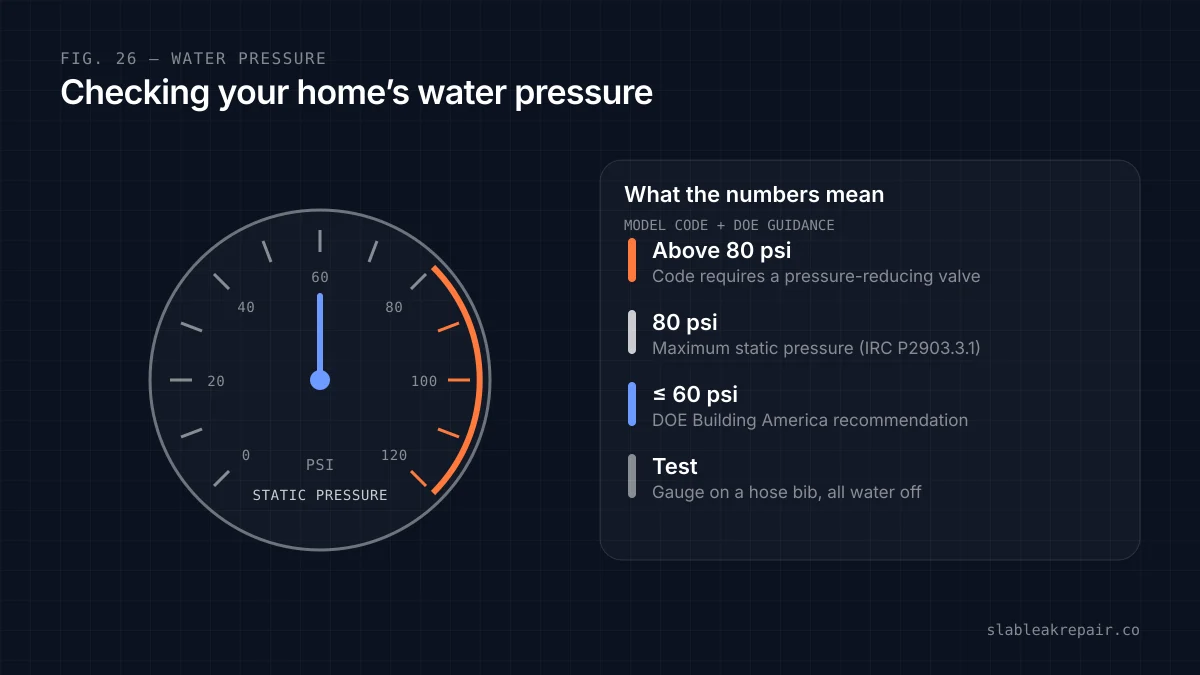
Prevention
House water pressure: what’s normal, what’s too high and how to fix it
What water pressure a house should have, the 80 psi code limit, how to test it with a hose-thread gauge, and when a pressure-reducing valve needs replacing.
Read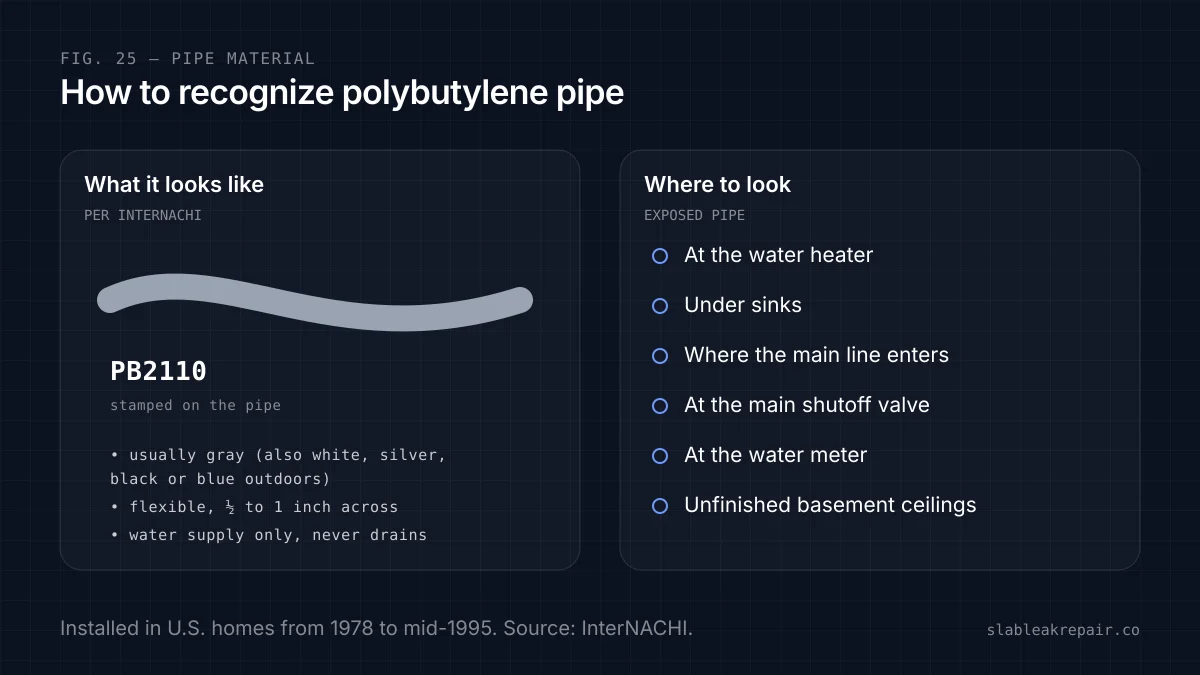
Pipe materials
Polybutylene pipe: how to identify it and when to replace it
How to recognize polybutylene water pipe, why it fails, what it means for insurance and resale, and what replacing it typically costs in a slab-on-grade home.
Read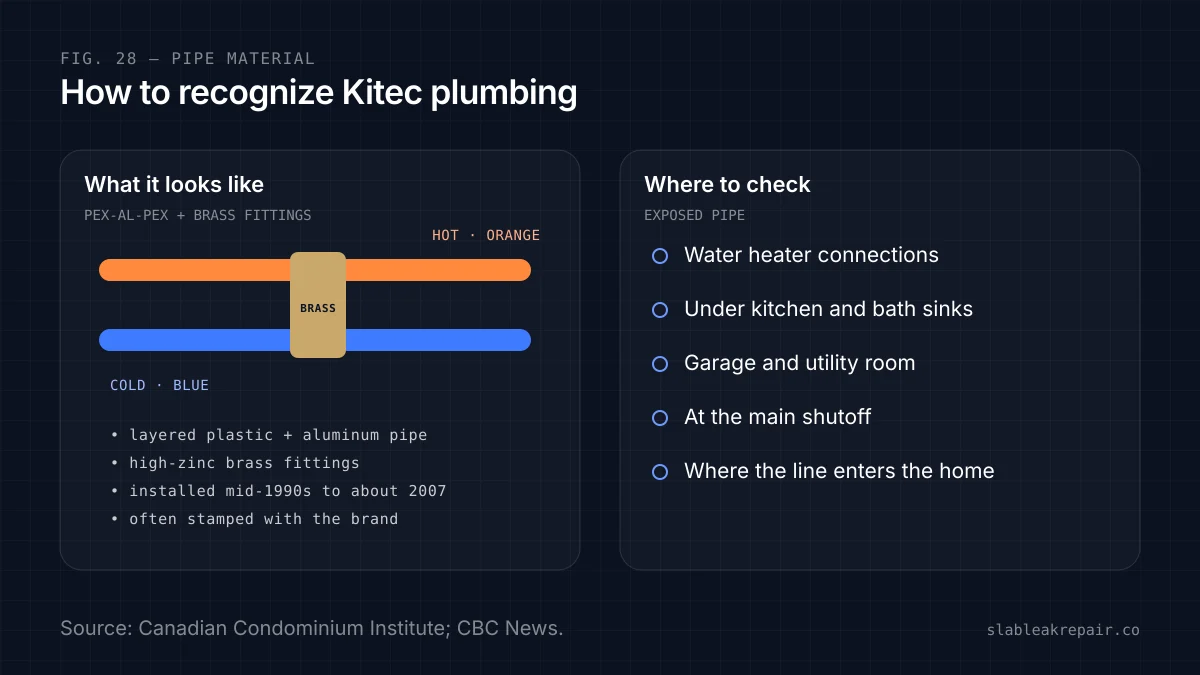
Pipe materials
Kitec plumbing: how to spot it and what to do if you have it
How to recognize Kitec PEX-aluminum pipe and its brass fittings, why they fail, what happened with the class action, and how replacement usually works.
Read
Home buying
Buying a house with a slab leak history: what to check before you close
What to ask, test and request before buying a slab home with a past or suspected slab leak: disclosures, CLUE reports, plumbing tests and repair records.
Read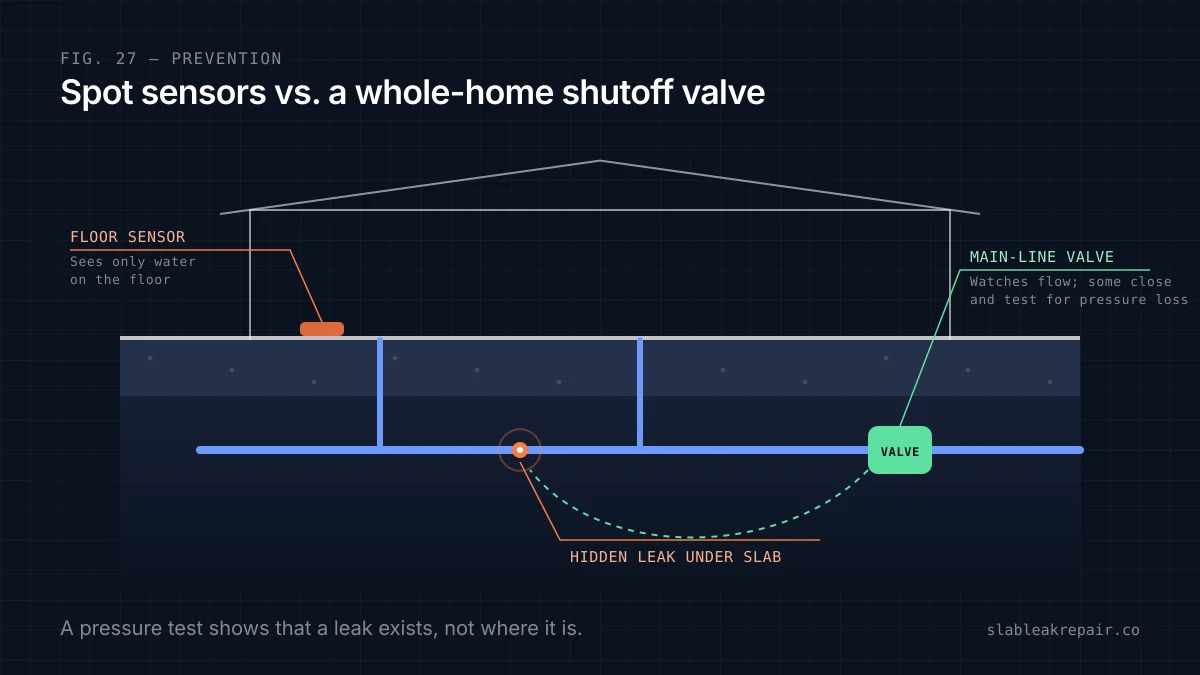
Prevention
Automatic water shutoff valves: can they catch a slab leak?
How whole-home automatic water shutoff valves and leak sensors work, whether they can detect a hidden slab leak, what insurers may offer, and their limits.
Read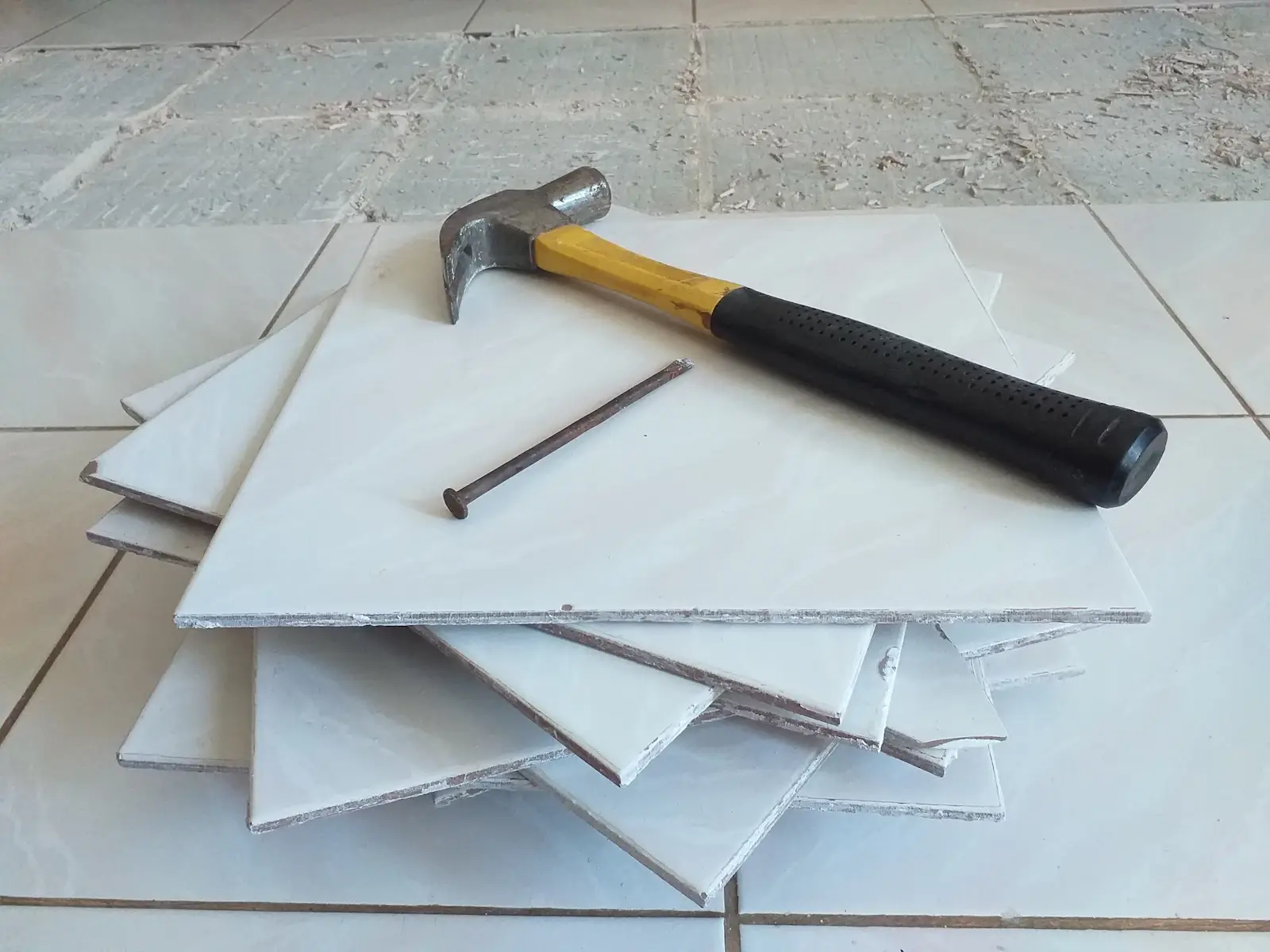
After the repair
Floor repair after a slab leak: drying, matching and who pays
How floors are dried and repaired after a slab leak, why matching tile or wood is the hard part, how insurance treats tear-out and matching, and what to ask.
ReadServices explained
Slab leak repair
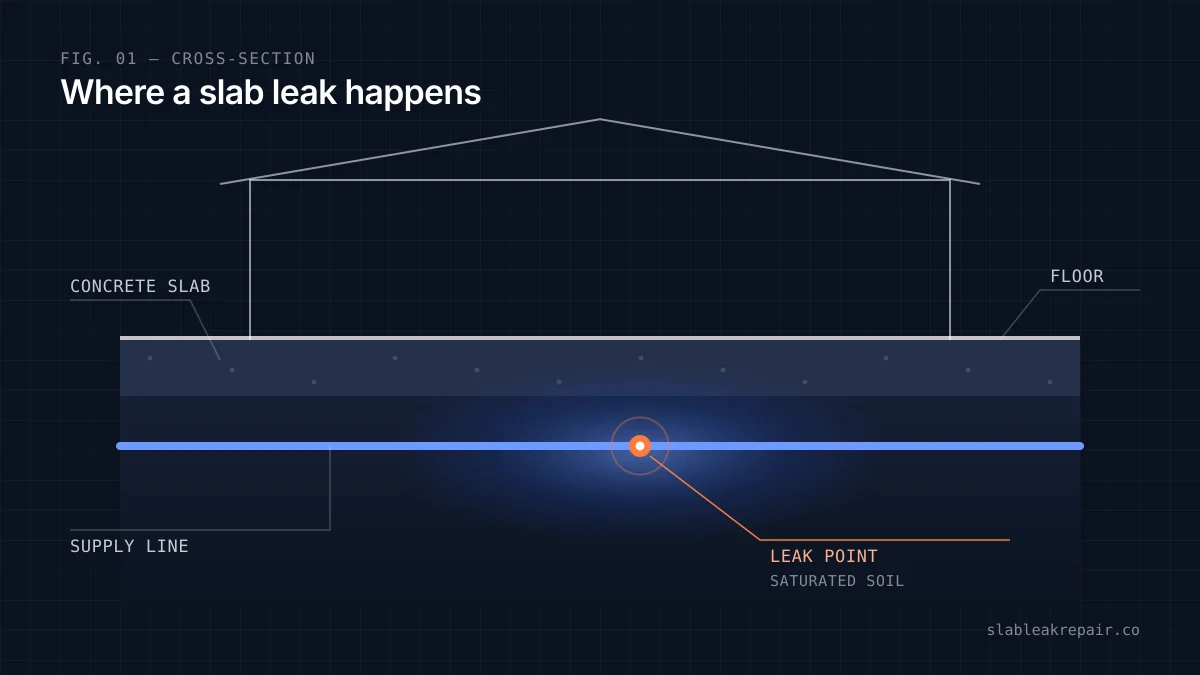
Slab leak repair, step by step: how to fix a slab leak
How slab leak repair works: confirm the leak, pinpoint it, choose spot repair, reroute, lining or repipe, then restore floors. Costs average $2,300 (Angi).
Read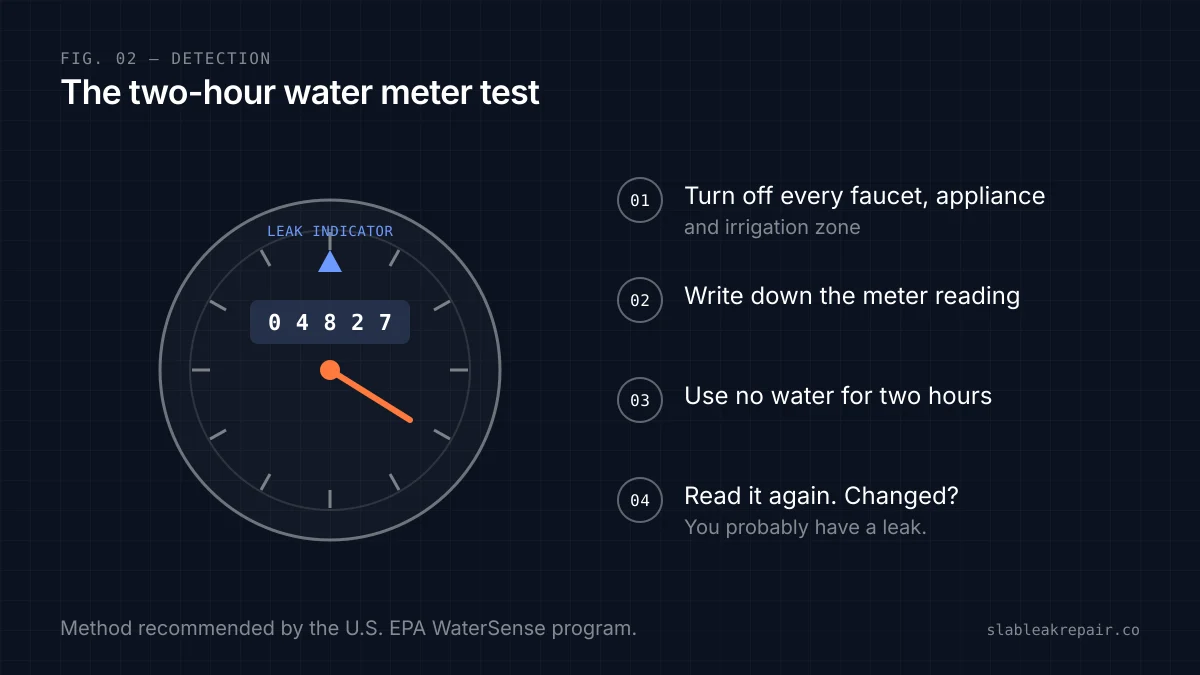
Leak detection
Slab leak detection: how plumbers find a leak under concrete
How to check for a hidden leak with your water meter, and the tools plumbers use to pinpoint a leak beneath a slab before any concrete is broken.
Read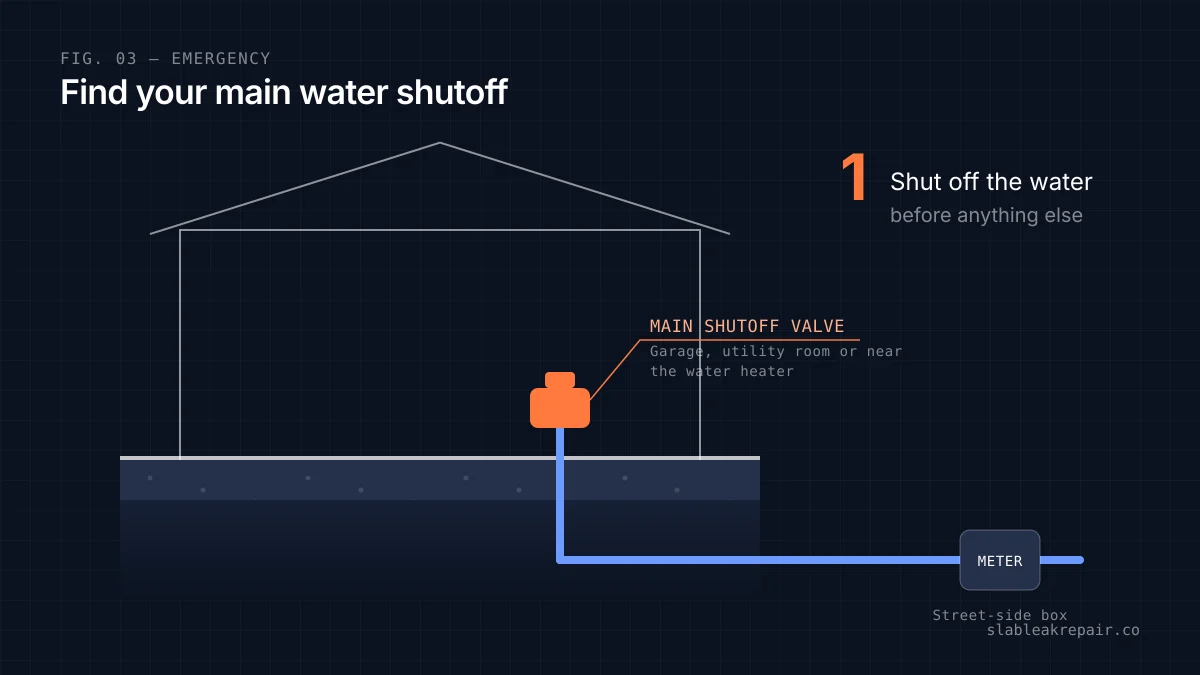
Emergency
Emergency slab leak: what to do right now
Water coming up through your floor? The first steps to take, in order, to stop the water, stay safe, limit damage and protect your insurance claim.
Read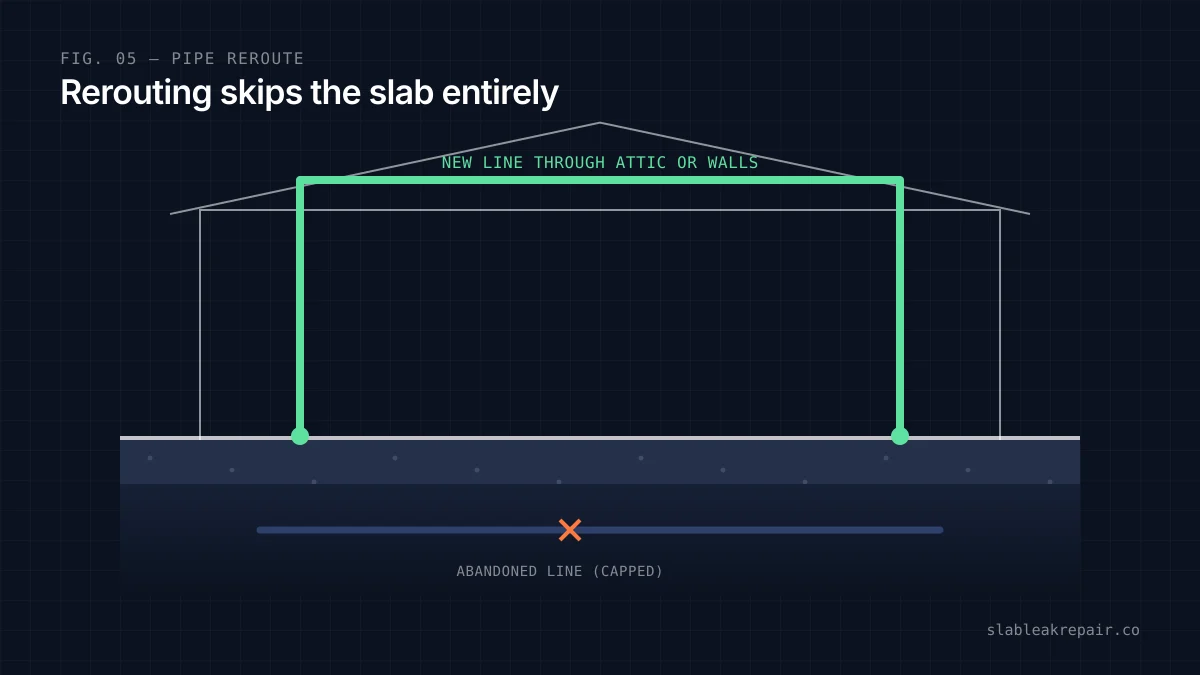
Pipe rerouting
Pipe rerouting for slab leaks
How rerouting a leaking under-slab water line through the walls or attic works, when it beats a spot repair, and what to ask your plumber before you agree.
Read
Under-slab plumbing
Under-slab plumbing repair: supply and drain lines
How under-slab supply and drain line problems differ, how each is diagnosed, and the repair options for leaking drain and sewer lines beneath a foundation.
Read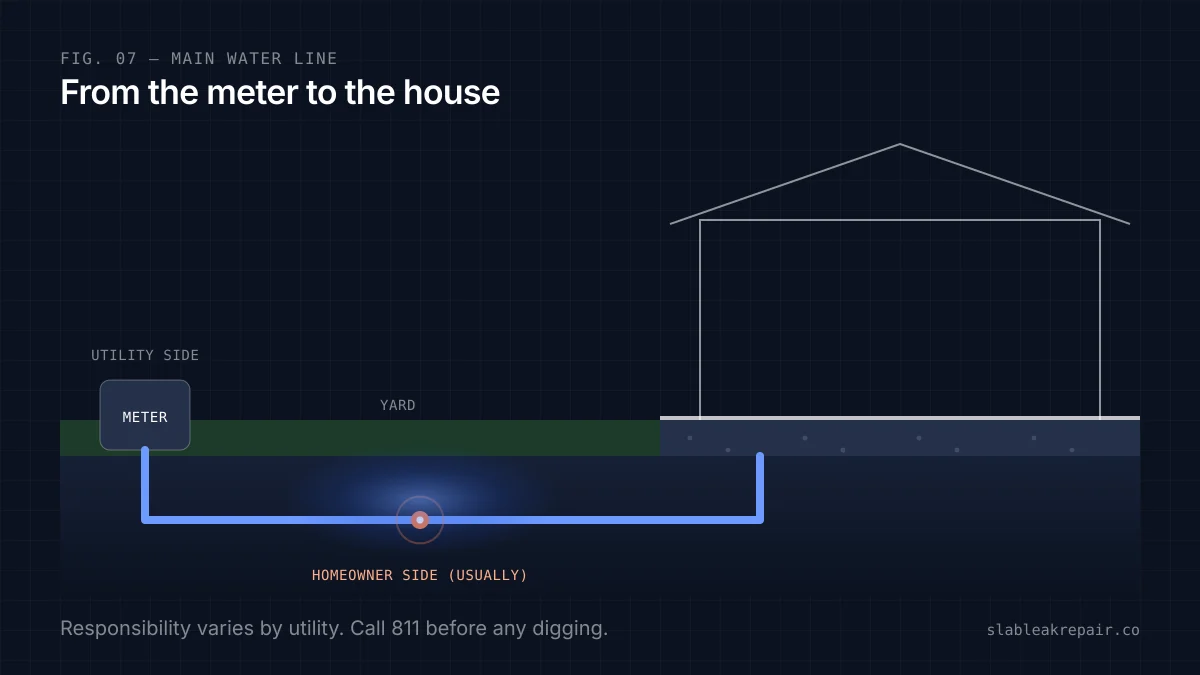
Water line repair
Main water line leak repair
Signs of a leak in the line between your water meter and your house, who is usually responsible for it, and how it gets repaired, including digging rules.
Read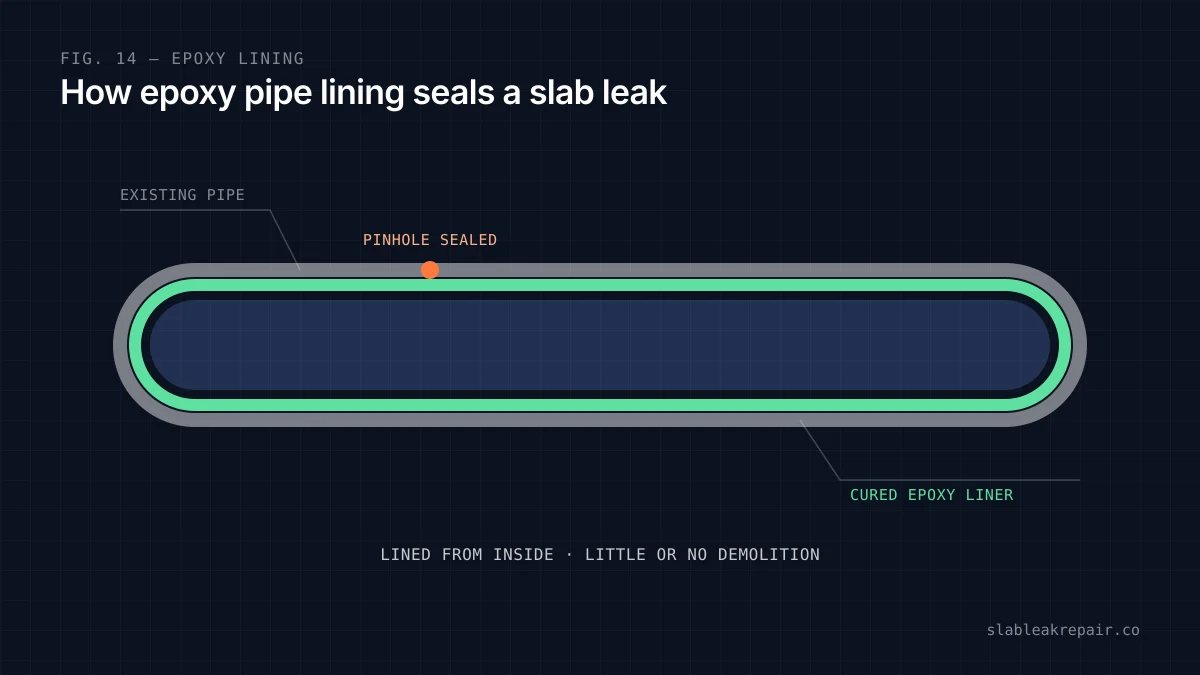
Epoxy pipe lining
Epoxy pipe lining for slab leaks: how it works and what it costs
How epoxy pipe lining seals a slab leak from inside the pipe without breaking concrete, when it works and when it doesn’t, typical costs, and questions to ask.
Read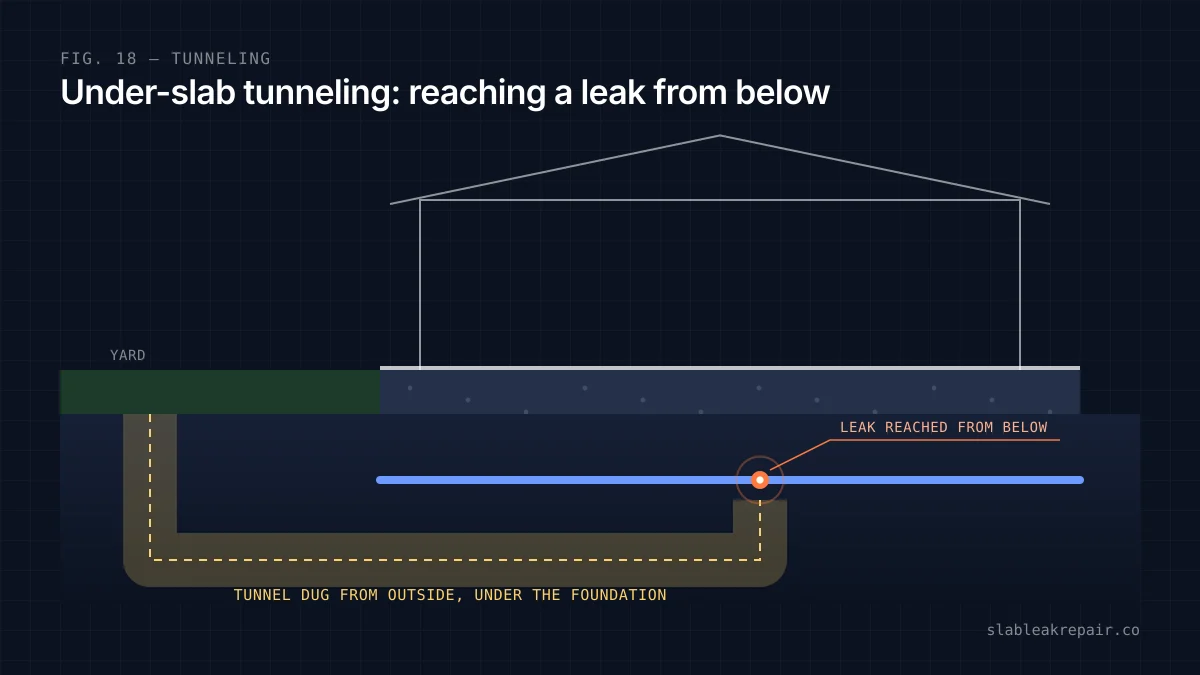
Repair method
Under-slab tunneling: fixing a slab leak without breaking the floor
How under-slab tunneling reaches a leak from outside the house, when it beats breaking the slab or rerouting, and the trade-offs to ask a plumber about.
ReadCheck for a verified slab leak specialist near you.
Free for homeowners. If we don’t cover your ZIP yet, we’ll say so.