What should I do about wet floors right after a slab leak?
Stop the water, then dry. EPA advises drying water-damaged areas and items within 24 to 48 hours to prevent mold growth, and recommends professional help for large areas or water from sewage.[1] Carpet and pad usually need to be pulled back to dry; floating floors and laminate often trap water underneath. Photograph everything before it is removed. See slab leak water damage for the cleanup steps.
How should each type of flooring be handled after clean water damage?
EPA’s water damage table, written for clean water damage, gives material-by-material actions.[3] It also notes that the subfloor under carpet or other flooring must be cleaned and dried too.[3] Water from a drain line is not clean water, so treat a drain leak as a job for a professional.
| Material | EPA recommended action |
|---|---|
| Carpet and backing | Dry within 24–48 hours: extract water, dehumidify, use fans |
| Tile, vinyl, linoleum | Clean and dry the surface, then check that the layer underneath is dry |
| Wood flooring | Remove moisture right away; dry with dehumidifiers, gentle heat and fans, using care with heat |
| Drywall | Dry in place if not swollen and seams are intact; otherwise replace |
| Concrete slab | Wet vacuum, then dehumidifiers, fans or heaters |
How long before new flooring can go down?
Until the slab and subfloor are dry, which takes longer than the surface suggests. Concrete holds water, and flooring installed over a damp slab can cup, lift, lose adhesion or grow mold underneath. Ask the restoration company or flooring installer to measure moisture and record the readings before installation, and to follow the flooring manufacturer’s limits.
Why is matching flooring the hardest part?
Tile is discontinued, dye lots change and wood ages, so a patch of new flooring can look different from the rest of the room. Whether insurance pays to replace undamaged flooring so it matches is one of the most disputed parts of water claims.
Florida is one example of a state that addresses it in law: section 626.9744 says that, unless the policy provides otherwise, an insurer must make reasonable repairs or replace items in adjoining areas when replaced items do not match in quality, color or size.[2] In 2023, Florida’s Office of Insurance Regulation approved policy forms from several insurers that cap matching payments at 1 percent of the policy limit for the main structure.[5] A 2026 Senate bill proposed amending the section again,[4] so check the current statute before relying on it. Rules elsewhere differ, so read the loss settlement section of your own policy.
Does insurance pay for flooring after a slab leak?
Policies often treat a slab leak as separate costs: the water damage, which is often covered if the leak was sudden; the tear-out to reach the pipe, which is sometimes covered; and the pipe repair itself, which is often excluded. Flooring falls under the first two. See does insurance cover slab leaks and keep the plumber’s report that shows where and why the floor was opened.
Can the floor be left alone during the repair?
Often, yes. A pipe reroute runs new line through walls or the attic, and tunneling reaches the pipe from below. Both can spare finished floors. Ask about them before agreeing to break tile or hardwood, especially if the flooring cannot be matched.
How much does floor repair cost after a slab leak?
It depends on the material and how much must be replaced to look right. Angi lists floor repair at about $2 to $30 per square foot and water damage repair at about $3 to $7.50 per square foot.[6] Ask for itemized quotes that separate drying, demolition, slab patching and new flooring, because insurers often handle each line differently.
Frequently asked questions
Can I reuse the tiles that were removed?
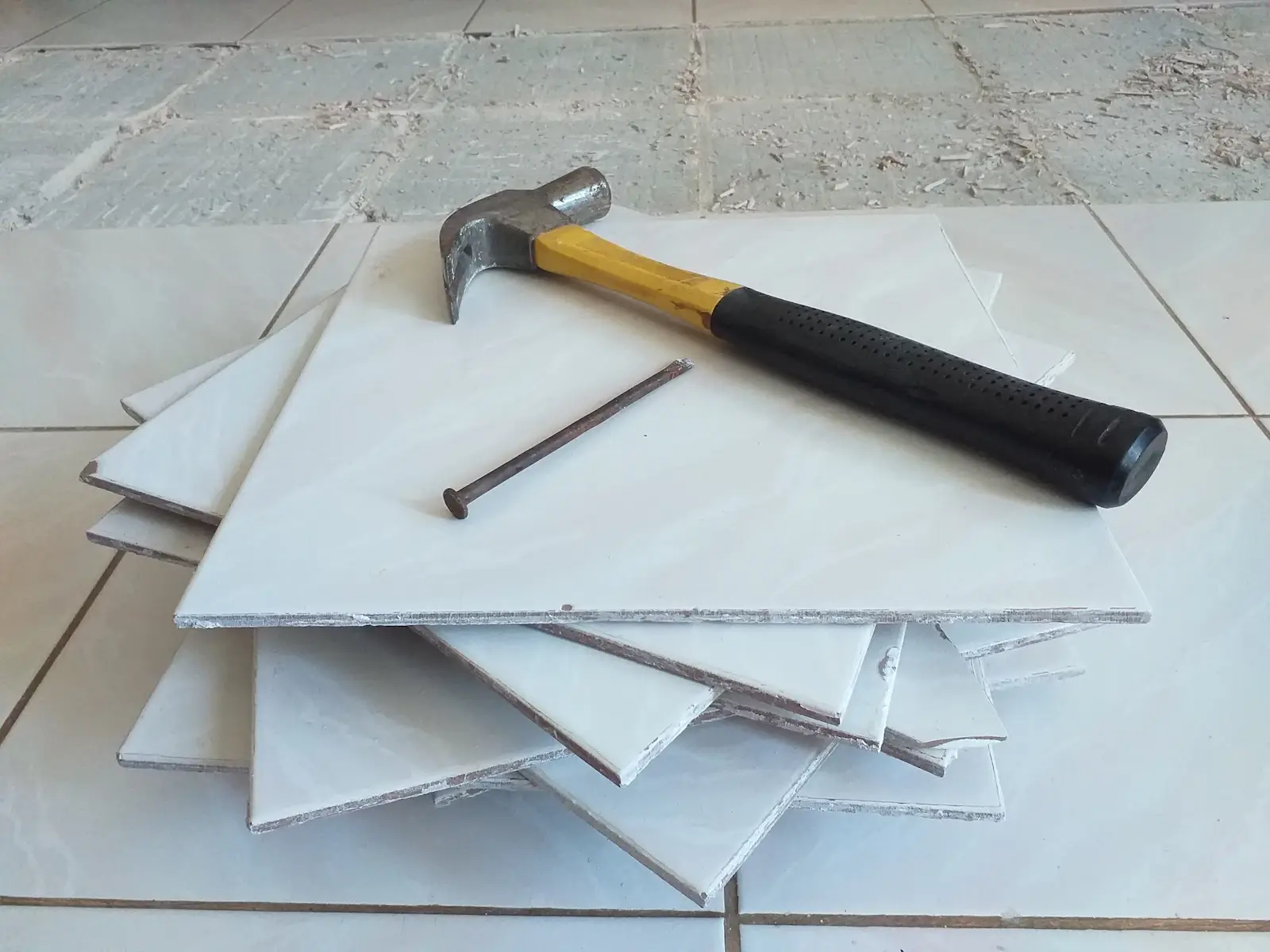
Rarely. Tile usually cracks when lifted and old thinset is hard to clean off. Ask whether spare tiles were left from the original installation; they are the best chance of a match.
Who patches the concrete after a slab leak repair?
Often the plumber patches the opening in the slab, and the flooring installer prepares the surface. Confirm in writing who does each step and who is responsible if the patch is uneven.
Should I file an insurance claim for a small floor repair?
Compare the repair cost with your deductible and ask your insurer or agent how a claim could affect future premiums. Claims are recorded on the property’s claims history.
Sources
- [1]U.S. Environmental Protection Agency, “A Brief Guide to Mold, Moisture and Your Home.” www.epa.gov/mold/brief-guide-mold-moisture-and-your-home (accessed )
- [2]The Florida Senate, “626.9744 Claim settlement practices relating to property insurance (2025 Florida Statutes).” www.flsenate.gov/Laws/Statutes/2025/626.9744 (accessed )
- [3]U.S. Environmental Protection Agency, “Mold Remediation in Schools and Commercial Buildings Guide: Chapter 4 (Table 1).” www.epa.gov/mold/mold-remediation-schools-and-commercial-buildings-guide-chapter-4 (accessed )
- [4]The Florida Senate, “SB 1268 (2026), filed bill text.” flsenate.gov/Session/Bill/2026/1268/BillText/Filed/HTML (accessed )
- [5]Claims Journal, “Fla. Insurers Imposing New Limits on Amounts Spent to Match Appearance.” www.claimsjournal.com/news/southeast/2023/10/23/320019.htm (accessed )
- [6]Angi, “What Does Pipe Replacement Cost for a Single Pipe or Project?.” angi.com/articles/how-much-does-installing-or-replacing-plumbing-pipes-cost.htm (accessed )