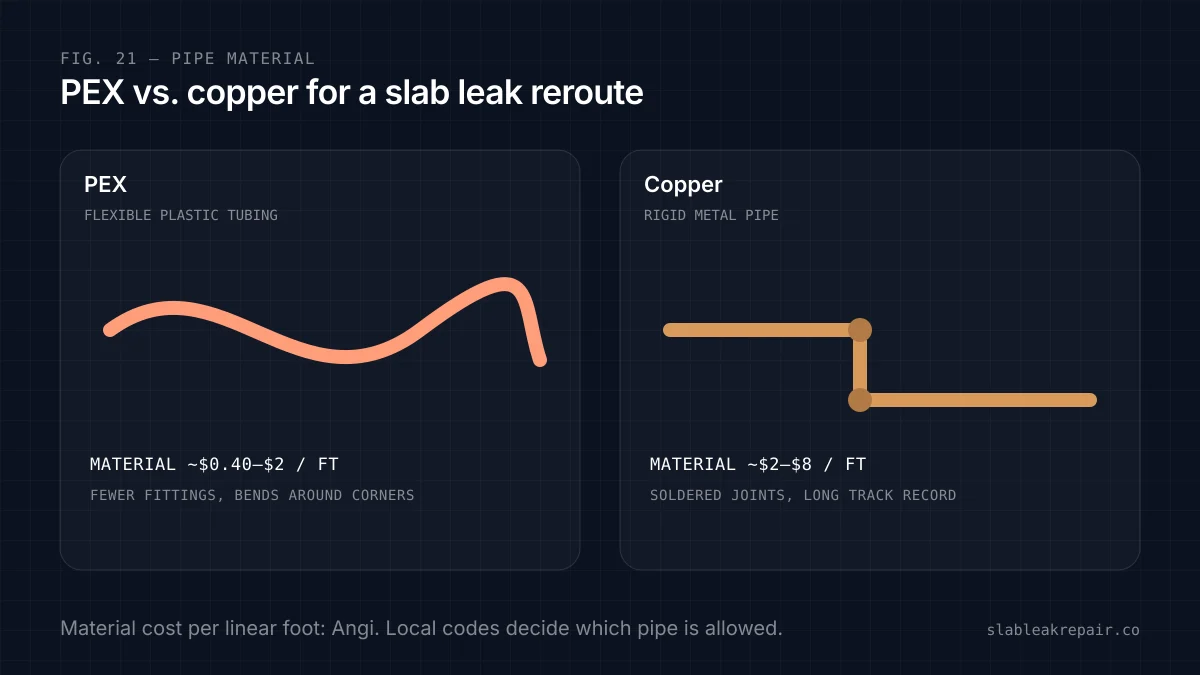
How do PEX and copper compare?
| Factor | PEX | Copper |
|---|---|---|
| Material cost per foot | About $0.40–$2 | About $2–$8 |
| Installation | Flexible; long runs with fewer fittings | Rigid; soldered or pressed joints at every turn |
| Typical use in reroutes | Common for overhead and in-wall reroutes | Used where preferred or required |
| Things to ask about | UV exposure, rodent risk, fitting type | Water chemistry and corrosion history |
Why does pipe material matter after a slab leak?
If your old copper failed under the slab, the reason it failed matters. Corrosion from water chemistry or abrasion against concrete can affect other runs of the same pipe. When you reroute or repipe, the new line runs through walls or the attic instead of the slab, so it’s easier to inspect and repair later, whichever material you choose. Our causes guide covers why slab pipes fail.
Does PEX make a slab leak reroute cheaper?
Usually somewhat. Material is a small part of a reroute bill. Labor, wall and ceiling openings, permits and patching drive most of the cost. PEX’s lower material price and faster installation can still trim the total, especially on a whole-home repipe with long runs.[1] See our cost guide for full job ranges.
What should I ask my plumber about pipe material?
- Which materials does our local code allow for this job?
- Why do you recommend this material for my water and my house?
- What fittings will you use, and what is the warranty on material and labor?
- Will any of the new pipe be exposed to sunlight, heat or rodents?
Frequently asked questions
Is PEX allowed everywhere?
Not necessarily. Local plumbing codes decide which pipe materials can be used, so your plumber should confirm what’s permitted where you live.[1]
Sources
- [1]Angi, “How Much Does It Cost to Repipe a House?.” www.angi.com/articles/cost-to-repipe-a-house.htm (accessed )