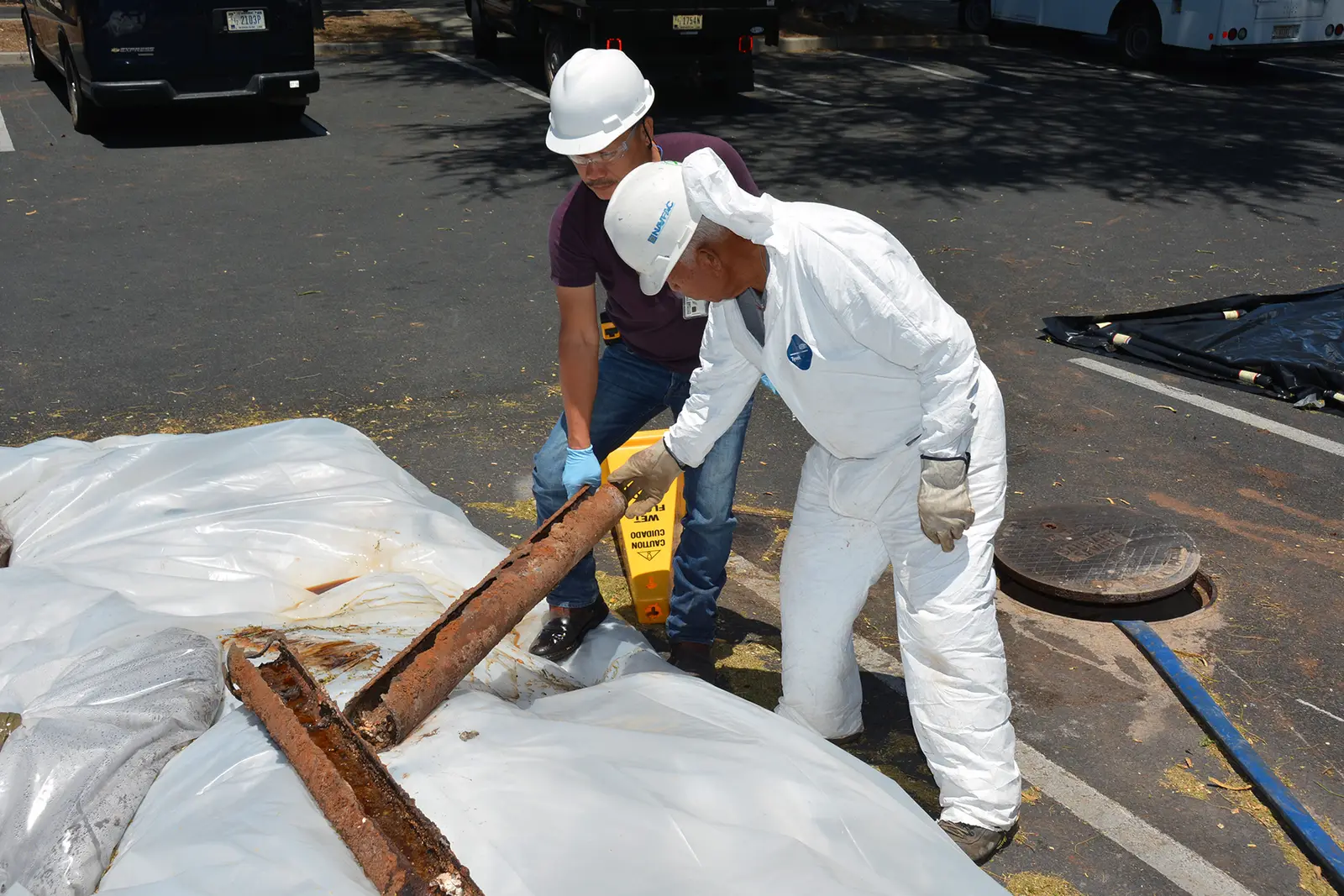

Why do cast iron drain pipes fail under a slab?
Cast iron is strong and rigid, but it corrodes slowly over decades and builds up deposits inside that restrict flow.[1] Drains run partly full, so the bottom of the pipe stays wet and often wears through first. The Navy crew in the photo above found exactly that: a 35-foot section whose bottom had completely disintegrated.[2]
Insurance Journal reports that cast iron drains are common in homes built before 1975 and have become a frequent subject of Florida insurance claims and lawsuits.[1]
What are the signs of a failing cast iron drain?
Drain-side problems look different from supply leaks, because the drain only carries water when something is used:
- Slow or gurgling drains in several fixtures, or repeated backups.
- Sewer odor indoors, especially near floor drains, tubs or toilets.
- Damp or loose flooring, or mold at the base of walls near bathrooms and the kitchen.
- Cracks or settling in floors near plumbing walls; see slab leak foundation damage.
How do I confirm the condition of a cast iron drain?
Start with a video inspection of the drain, which shows the inside of the pipe and where defects are.[1] A hydrostatic test shows whether the system holds water, but drains are not normally full, so a failed test should lead to isolation testing and a camera, not straight to a replacement quote.[1] Ask for the video file and a written description of each defect and its location.
What are the repair options for cast iron drains under a slab?
The right choice depends on how much of the system is damaged and where it runs:
| Option | What it involves | Best for |
|---|---|---|
| Spot repair | Open the slab at the damaged section and replace it | One clearly located defect |
| Lining | Clean the pipe and install a polymer liner inside it | Corroded but intact pipe; avoids cutting floors |
| Reroute | Abandon the run under the slab and route new drain pipe elsewhere | Long damaged runs where access is hard |
| Tunneling | Dig under the foundation from outside to replace pipe | Keeping interior floors intact |
| Full replacement | Trench through floors and replace the system | Widespread failure confirmed on camera |
How much does it cost to replace cast iron drains?
Claims vary widely. One law firm’s website cited in Insurance Journal in 2022 says replacing a home’s drain pipes can cost $20,000 to $100,000, while defense engineers quoted in the same article argue that many systems do not need full replacement and that cleaned pipe can be lined with polymer sleeves that last for decades.[1] Because the spread is so large, get at least two written quotes that each reference the same camera footage. See tunneling under a slab for the alternative to breaking floors.
What should I ask before approving a cast iron drain replacement?
A full replacement is a large, disruptive job. Before you sign, get clear written answers to these questions:
- Can I have the camera video, with each defect’s location marked on a floor plan?
- Which sections failed, and why does the rest need replacing too?
- Is lining an option for any section, and if not, why not?
- Can the drain be rerouted or reached by tunneling instead of trenching through finished floors?
- Who pulls the permit, who patches the slab, and who replaces the flooring?
- What warranty covers the new pipe or liner, and what does it exclude?
Does homeowners insurance cover cast iron pipe replacement?
Often not for the pipe itself. Policies commonly exclude wear, tear and deterioration, though they may cover sudden water damage and sometimes the cost of reaching the pipe. Coverage depends on your policy and state. Read does insurance cover slab leaks and ask your insurer in writing before work starts.
Frequently asked questions
How long do cast iron drain pipes last?
There is no single answer. Lifespan depends on soil, water and use, and some systems last far longer than others. Age alone does not prove failure; a camera inspection does.
Can cast iron and PVC be connected?
Yes. Plumbers routinely join new PVC or ABS drain pipe to existing cast iron with approved transition couplings, which is how partial replacements and reroutes work.
Is pipe lining as good as replacement?
It depends on the pipe. Lining needs a pipe that is still structurally intact enough to clean and line. Ask the installer what condition the pipe must be in and what warranty applies.
Sources
- [1]Insurance Journal, “Cast Iron Drainpipes Latest Target in Florida Claims. But They Can Be Defended..” insurancejournal.com/news/southeast/2022/06/20/672576.htm (accessed )