What is polybutylene pipe?
Polybutylene (PB) is a plastic resin pipe that was widely used for water supply lines because it was cheap and easy to install. InterNACHI says it was manufactured from 1978 to mid-1995 and installed in up to 10 million U.S. homes.[1] It was never used for drain, waste or vent lines.[1]
How do I know if my house has polybutylene pipe?
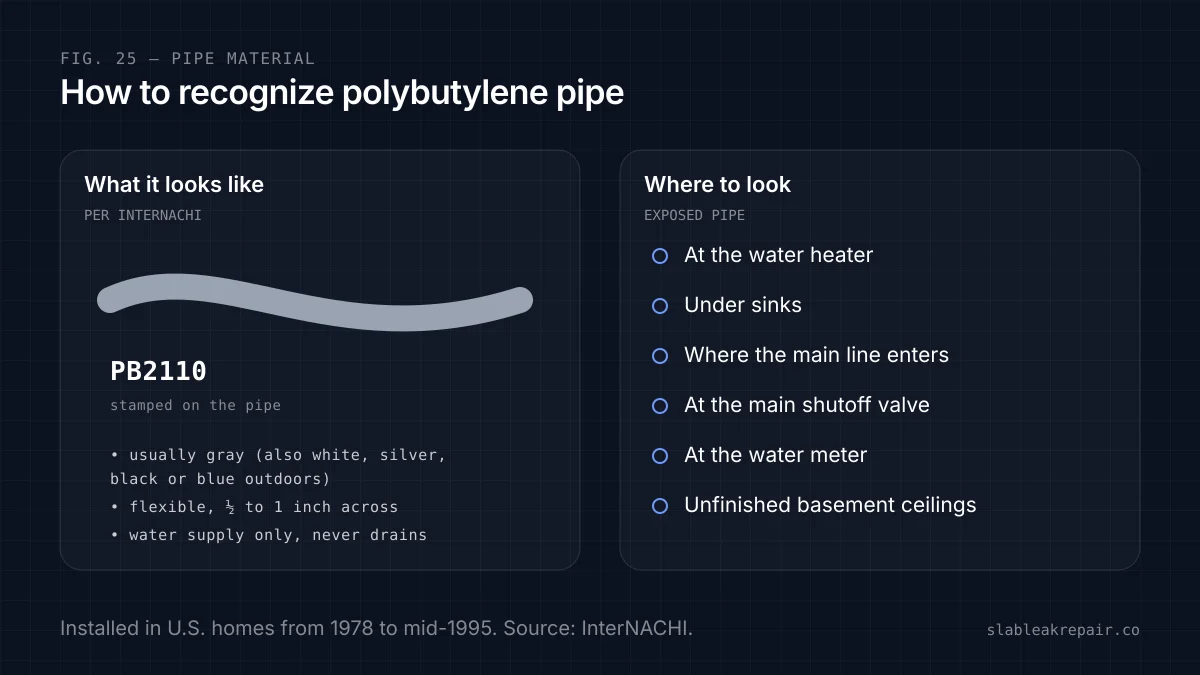
Look where pipes are exposed. InterNACHI’s identification notes include:[1]
- Color: usually gray, but it can be white, silver, black or blue. Blue was used mainly outdoors for cold water. InterNACHI cautions that black pipe may be polyethylene and white may be PVC, so check the markings.
- Markings: often stamped “PB2110.”
- Size and shape: ½ to 1 inch across, flexible and sometimes curved, unlike rigid copper.
- Where to look: at the water heater, under sinks, in unfinished basement ceilings, where the line enters the house, at the main shutoff and at the meter.
Why does polybutylene pipe fail?
InterNACHI explains that disinfectants commonly found in public water react with the pipe and make it flake apart from the inside; small fractures deepen until water escapes.[1] Because the damage starts inside, it cannot be seen without cutting the pipe open, which is beyond the scope of a normal home inspection.[1]
Lawsuits over the material led to class action settlements that InterNACHI says paid out about $1 billion in total.[1] Those settlement programs are long closed, so homeowners now pay for replacement themselves.
Does polybutylene affect insurance and resale?
It can. InterNACHI notes that homeowners with polybutylene may face higher premiums or be denied coverage.[1] Lenders and buyers sometimes ask for it to be replaced before closing. If you are buying, see buying a house with a slab leak.
How much does it cost to replace polybutylene pipe?
Angi reports a typical range of $300 to $5,100, with an average around $1,200 for partial replacement, and up to about $15,000 to repipe a whole house.[2] Labor is most of the cost. In a slab home, supply lines that run under the slab are usually abandoned and replaced with new lines through the attic or walls rather than dug up, much like a pipe reroute. Our PEX vs. copper guide covers the material choice.
| Option | When it fits | Watch out for |
|---|---|---|
| Replace one leaking section | A single failure on an otherwise sound system | The rest of the pipe is the same age and material |
| Replace exposed runs and fittings | Leaks keep appearing at joints | Lines under the slab or in walls stay in place |
| Whole-house repipe | Insurance or a sale requires it, or leaks repeat | Highest cost; wall and ceiling patching afterward |
Frequently asked questions
Is polybutylene pipe illegal?
No. InterNACHI notes that no regulations require polybutylene to be replaced, although many plumbers recommend it. It is no longer made, and some insurers and buyers treat it as a risk, so check what your insurer requires.
Can I still claim money from the polybutylene class action?
The major settlement programs from the 1990s have closed, so homeowners generally cannot claim from them today. Check any claim service carefully before paying a fee.
Is PEX the same as polybutylene?
No. Both are flexible plastic pipes and can look similar, but PEX is a different material that is widely used today. Markings on the pipe usually tell them apart.
Sources
- [1]International Association of Certified Home Inspectors (InterNACHI), “Polybutylene for Inspectors.” www.nachi.org/pb.htm (accessed )
- [2]Angi, “Cost to Replace Polybutylene Pipes.” angi.com/articles/cost-to-replace-polybutylene-pines.htm (accessed )